
What Makes a Strong Local Food System?
Seven essential pieces that connect farms, families, and communities
When people think about the food system, they often picture two simple points: the farm and the dinner table. In reality, there is much more happening in between. Many interconnected parts work together to move food safely, efficiently, and reliably from producers to consumers as part of a healthy local food system. Farmers, processors, distributors, retailers, schools, food banks, and families all play a role in this system.
At Warehouses4Good, we often talk about food logistics infrastructure because it supports one of the most overlooked parts of the food system. But infrastructure alone is not the answer. A strong local food system depends on people, partnerships, and organizations working together toward a common goal: connecting communities with healthy, locally produced food.
The graphic below illustrates seven essential pieces of a healthy local food system.
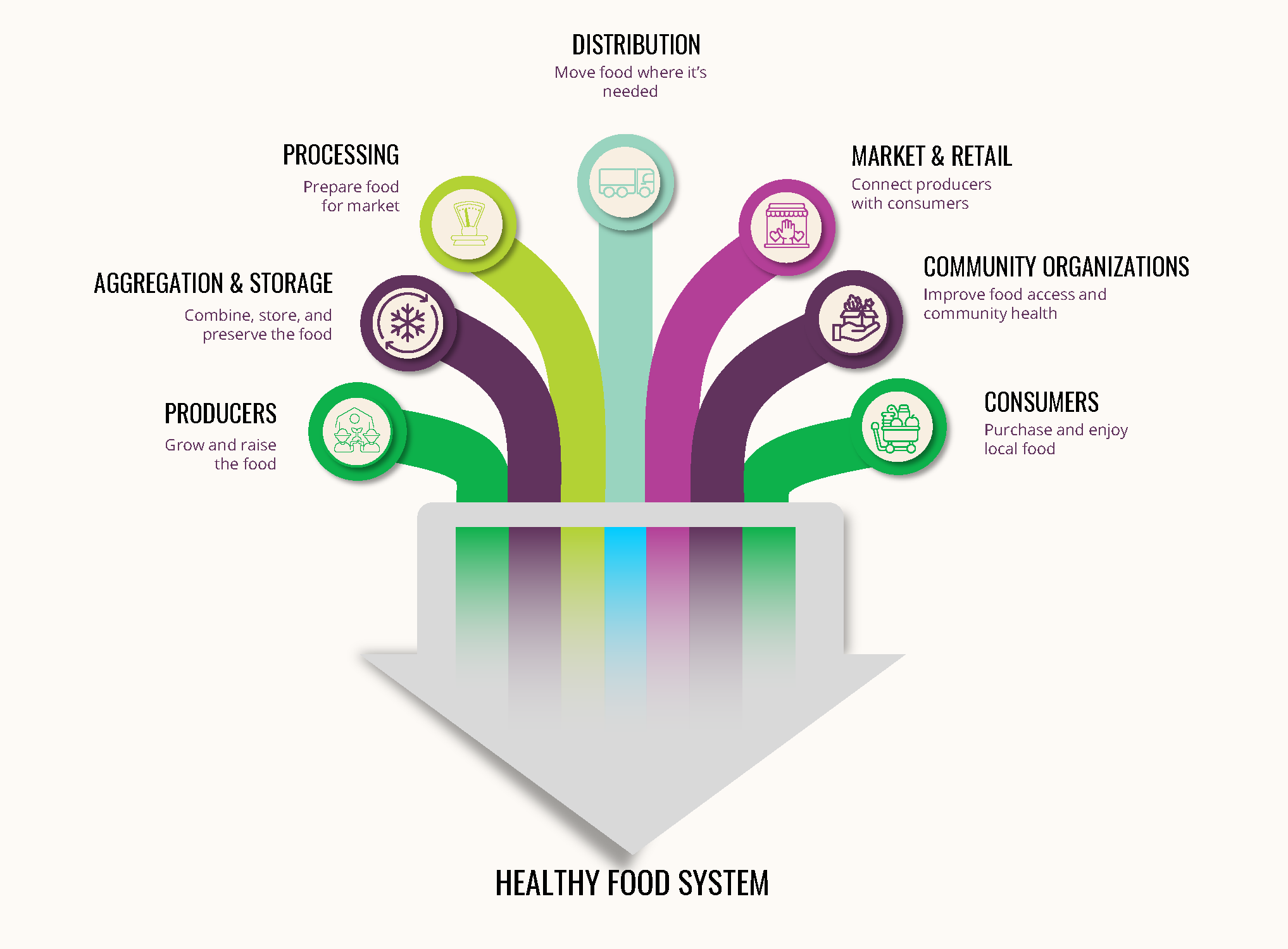
Figure 1: The seven essential pieces of a healthy food system
1. Producers
Every food system begins with the people who grow, raise, and harvest food. Farmers, ranchers, and producers provide the foundation of the system, transforming land, labor, and knowledge into the food that nourishes our communities. Their success depends on having reliable pathways to reach customers and markets.
2. Aggregation & Storage
Few farms produce enough volume to supply schools, grocery stores, hospitals, or regional distributors on their own. Aggregation facilities allow products from multiple producers to be combined, stored, and managed efficiently. Cold storage and warehouse space also help preserve quality, reduce food loss, and extend the availability of fresh products.
3. Processing
Many foods require preparation before reaching consumers. Washing, sorting, packaging, freezing, milling, cutting, or other value-added processing improves food safety, increases shelf life, and creates products that meet the needs of retailers, institutions, and families. Processing also creates new opportunities for local businesses and agricultural entrepreneurs.
4. Distribution
Once food is ready for market, it must reach its destination safely and efficiently. Distribution includes transportation, logistics, inventory management, and coordination between buyers and sellers. Strong distribution networks help ensure that locally produced food can reach schools, hospitals, grocery stores, food banks, restaurants, and neighboring communities.
5. Markets & Retail
Markets connect producers with consumers in many different ways. Farmers markets, roadside stands, community supported agriculture (CSA) programs, food cooperatives, grocery stores, and restaurants all play an important role. Together, they provide consumers with choices while creating diverse sales opportunities for local producers.
6. Community Organizations
Food banks, schools, hospitals, pantries, nonprofits, and other community organizations strengthen local food systems by increasing access to nutritious food and creating dependable demand for local products. These organizations often serve as trusted partners, helping ensure that healthy food reaches families who need it most.
7. Consumers
Consumers complete the food system. Every purchasing decision influences what is grown, how food moves through the supply chain, and which businesses thrive. Supporting local producers and food businesses helps strengthen regional economies while encouraging continued investment in local food systems.
Every Piece Matters
A healthy local food system is more than farms, grocery stores, or warehouses. It is a network of people, businesses, organizations, and infrastructure working together to connect food with communities.
When each part of the system is strong, local producers have more opportunities to grow, families have greater access to healthy food, and communities become more resilient. Strengthening any one piece benefits the whole system, but the greatest impact comes when every piece is connected.